
Why Do I Keep Waking Up at 3 AM Every Night?
The Hormone, Stress & Sleep Connection
Why do I keep waking up at 3 AM every night? Waking during the night can happen for many reasons, including menopause-related symptoms, stress or anxiety, insomnia, sleep apnea, medications, alcohol, urinary symptoms, and other medical or sleep conditions.
The clock may say 3:00 AM, but the time itself usually does not tell us the cause.
What matters more is the pattern.
Can you fall asleep easily but not stay asleep? Do you wake hot or sweaty? Is your mind racing? Are you getting up to use the bathroom? Do you snore, wake with headaches, or feel exhausted even after spending enough time in bed?
If you’re in your 40s or 50s and your periods, mood, temperature regulation, or other symptoms are changing too, perimenopause or menopause may be part of the picture. If you’re noticing other changes as well, read our guide to the 34 symptoms of perimenopause.
At Revive Wellness & Beauty in Powell, Ohio, we believe nighttime waking deserves a thoughtful look—not an automatic assumption that “it’s just hormones.”
________
What You’ll Learn
- Why you may keep waking in the middle of the night
- How perimenopause and menopause can affect sleep
- How stress and anxiety may contribute
- Why waking at 3 AM does not automatically mean your cortisol is high
- When insomnia, sleep apnea, thyroid problems, or other conditions should be considered
- When it’s time to talk with a healthcare professional
________
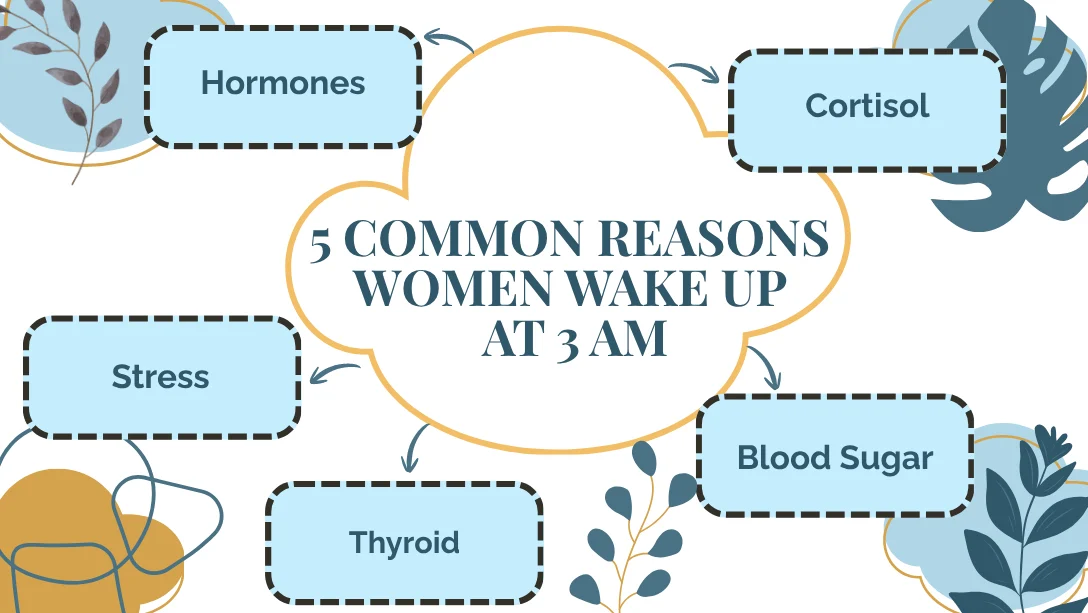
Why Do Women Wake Up at 3 AM?
There isn’t one universal cause. Nighttime waking may be related to menopause-related symptoms, insomnia, stress or anxiety, sleep apnea, medications, urinary symptoms, lifestyle factors, or another health condition.
The specific time you wake does not diagnose the cause.
________
Could Perimenopause or Menopause Be Waking You Up?
Yes. Perimenopause and menopause can affect both falling asleep and staying asleep.
The American College of Obstetricians and Gynecologists (ACOG) explains that sleep problems during perimenopause may include insomnia, waking earlier than usual, and sleep disruption from night sweats.
ACOG notes: “Night sweats may disrupt your sleep.”
The National Institute on Aging also explains that women in midlife may have difficulty falling asleep or may wake too early.
The National Institute on Aging notes: “Night sweats or a need to urinate might wake you up.”
Hormonal changes may be part of the reason your sleep has changed, but waking at 3 AM does not automatically mean you have a “hormone imbalance.”
If you’re also experiencing hot flashes, night sweats, menstrual changes, vaginal or urinary changes, mood changes, or other symptoms associated with the menopausal transition, it may be worth discussing the bigger picture with your healthcare provider.
________
Can Stress or Anxiety Cause Middle-of-the-Night Waking?
Yes.
Stress and anxiety can make it harder to fall asleep, stay asleep, or return to sleep after waking.
Maybe you wake up and immediately start thinking, “Why am I awake again?” or “What do I have to do tomorrow?”
However, waking at 3 AM does not by itself prove that your cortisol level is “too high.”
Rather than assuming cortisol is the cause based on the time you wake up, your overall symptoms, stress level, sleep pattern, health history, medications, and other possible contributors should be considered.
________
Could It Actually Be Insomnia?
Yes.
Insomnia doesn’t always mean lying awake for hours trying to fall asleep. It can also mean difficulty staying asleep or repeatedly waking earlier than you want.
If this happens regularly and affects how you function during the day, it deserves attention.
The National Institute on Aging’s guidance on menopause and sleep discusses healthy sleep habits and cognitive behavioral therapy for insomnia (CBT-I) as an option for persistent sleep problems.
________
Could Sleep Apnea Be the Missing Piece?
It could be.
Sleep apnea doesn’t always look the way people expect, particularly in women.
The National Heart, Lung, and Blood Institute explains that women with sleep apnea may experience symptoms including insomnia, tiredness, morning headaches, daytime sleepiness, anxiety, depression, and frequent nighttime waking.
Consider talking with your healthcare provider if you’re experiencing frequent nighttime waking, snoring or gasping, morning headaches, persistent daytime fatigue, or feeling unrefreshed despite spending enough time in bed.
________
What About Blood Sugar?
True low blood sugar can cause symptoms such as sweating, shakiness, hunger, a rapid heartbeat, or confusion.
But waking in the middle of the night does not automatically mean your blood sugar has dropped.
This is especially important if you have diabetes or use medications that can lower blood sugar. In that situation, nighttime symptoms should be discussed with the healthcare professional managing your treatment.
________
Could Your Thyroid Affect Your Sleep?
It can.
Both overactive and underactive thyroid conditions may affect sleep and energy, although nighttime waking alone cannot diagnose a thyroid problem. A broader functional medicine evaluation may consider thyroid health alongside your symptoms, history, and other possible contributors when clinically appropriate.
If poor sleep occurs alongside other symptoms or your medical history raises concern, thyroid evaluation may be appropriate.
________
Don’t Overlook Everyday Sleep Disruptors
Your sleep can also be affected by alcohol, caffeine later in the day, certain medications, late meals, screen use before bed, an inconsistent sleep schedule, a bedroom that is too warm, pain, or needing to urinate.
The National Institute on Aging notes that even small amounts of alcohol can make it harder to stay asleep.
Before assuming something complicated is happening, it is worth looking at the entire picture.
________
It’s Not Just About Losing Sleep
Poor sleep can affect mood, concentration, memory, reaction time, energy, and everyday functioning.
That can create a frustrating cycle: you aren’t sleeping well, you’re exhausted the next day, stress feels bigger, and nighttime arrives with the worry that you’ll wake up again.
Addressing the sleep problem matters.
________
When Should You Seek Help?
- Waking repeatedly several nights a week
- Unable to return to sleep
- Exhausted or sleepy during the day
- Frequent night sweats or hot flashes
- Significant menstrual changes
- Snoring, gasping, or waking with headaches
- Significant anxiety or mood changes
- Waking frequently to urinate
________
Should I Have My Hormones Checked?
Not necessarily.
If you’re in the perimenopausal years, your age, menstrual changes, symptoms, medical history, and overall clinical picture can provide important information.
A single hormone level cannot explain every case of nighttime waking.
Testing may be appropriate in certain circumstances or when your provider is evaluating other possible contributors to your symptoms.
________
How We Help at Revive Wellness & Beauty
We do not assume that every woman who wakes at 3 AM needs hormones.
We start by looking at the bigger picture.
Depending on your symptoms and health history, that conversation may include menstrual and menopausal changes, hot flashes and night sweats, stress and mood, thyroid health, nutrition and lifestyle, current medications and supplements, and relevant laboratory testing when clinically appropriate.
If your symptoms suggest sleep apnea, persistent insomnia, or another condition that requires additional evaluation, referral to the appropriate healthcare professional may be recommended.
________
You Don’t Have to Keep Guessing Why You’re Awake
If you keep waking up at 3 AM, don’t assume the clock itself holds the answer.
Your sleep pattern may be influenced by menopause-related symptoms, insomnia, stress, anxiety, a sleep disorder, medications, lifestyle factors, or another health condition. Sometimes several factors are involved at once.
If poor sleep is affecting your energy, mood, concentration, or quality of life, it may be time to have a conversation about what’s going on.
________
Frequently Asked Questions
Why do I keep waking up at 3 AM every night?
There is no single universal cause. Nighttime waking may be related to insomnia, menopause-related symptoms such as night sweats, stress or anxiety, sleep apnea, medications, urinary symptoms, lifestyle factors, or other health conditions. The specific time you wake does not diagnose the cause.
Is waking up at 3 AM a sign of perimenopause or menopause?
It can occur during perimenopause and menopause, but waking at 3 AM specifically is not a diagnostic sign. Hormonal changes, hot flashes, night sweats, urinary symptoms, and mood changes can contribute to disrupted sleep during the menopausal transition.
Does waking up at 3 AM mean my cortisol is high?
No. Waking at a particular time does not prove that cortisol is elevated. Stress and anxiety can interfere with sleep, but persistent nighttime waking should be considered in the context of your overall symptoms and health history.
Can sleep apnea cause me to wake repeatedly?
Yes. Sleep apnea can cause repeated nighttime waking. Women may experience symptoms such as insomnia, fatigue, morning headaches, daytime sleepiness, or frequent waking even without obvious loud snoring.
Should I have my hormones checked if I keep waking at night?
Not necessarily. Hormone testing is not automatically required for nighttime waking or perimenopause. Your age, menstrual history, symptoms, medical history, and other possible causes should help guide whether testing would be useful.
What can I do tonight to help myself sleep better?
Try maintaining a consistent sleep schedule, keeping your bedroom at a comfortable temperature, limiting late-day caffeine and alcohol, avoiding large meals close to bedtime, and reducing screens near bedtime. If sleep problems continue despite healthy sleep habits, talk with a healthcare professional.
________
Functional Medicine & Hormone Health • Wellness Therapies • Meet Revive • Schedule a Consultation