
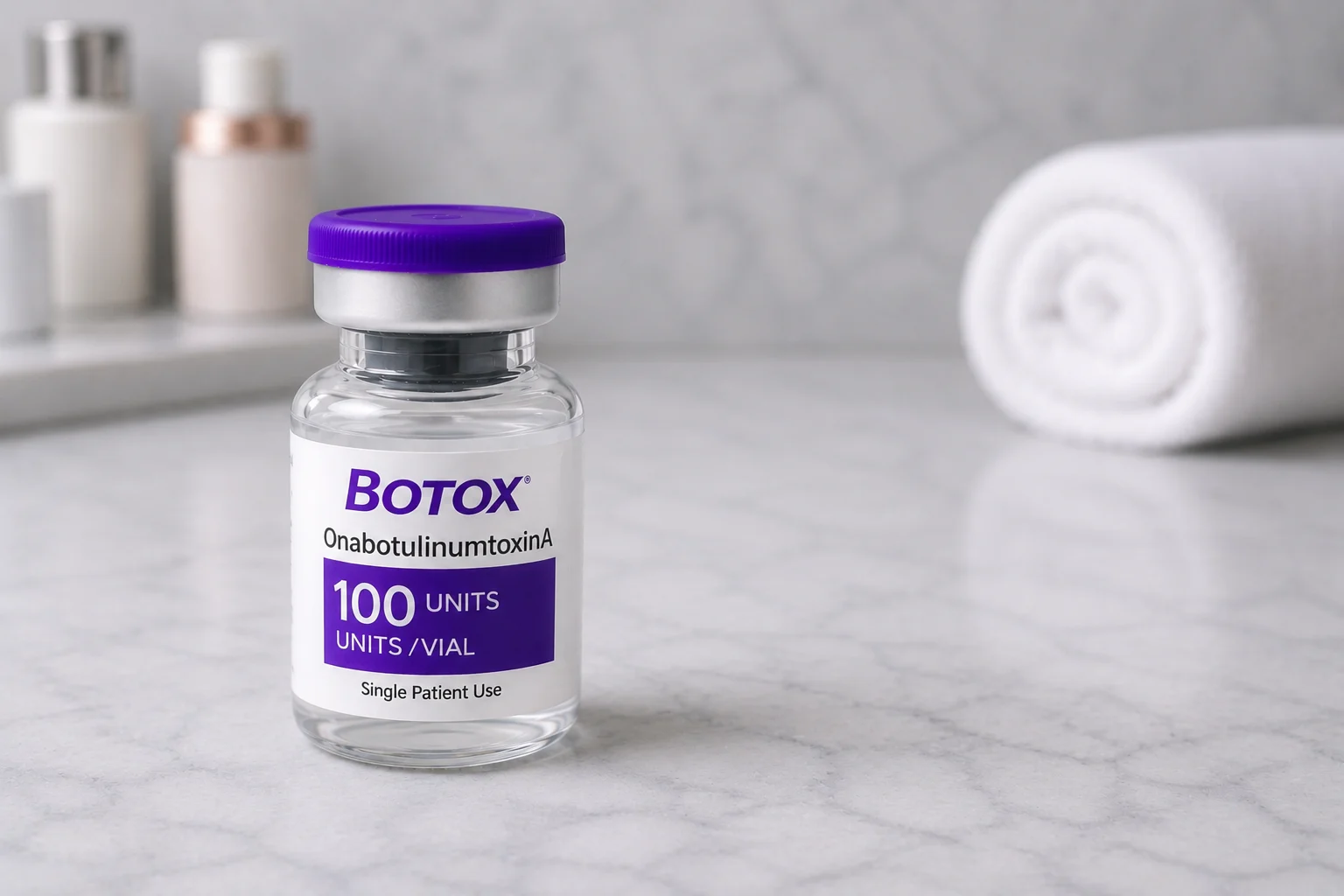
Why Is My Botox Wearing Off So Fast?
Movement coming back sooner than you expected? Before you blame your metabolism—or assume you need more units—there are a few things worth looking at.
Why is my Botox not lasting as long as it used to?
There is not one single reason. Dose, treatment area, muscle activity, injection pattern, product used, treatment goals, and individual response can all affect how long your result appears to last.
And one of the biggest sources of confusion is this:
Movement starting to return is not always the same thing as your Botox being completely worn off.
BOTOX Cosmetic is one brand of botulinum toxin type A. Other aesthetic botulinum toxin products, including XEOMIN, are different formulations with their own prescribing information, dosing, and clinical data. Their units should not be assumed to be interchangeable.
At Revive Wellness & Beauty in Powell, Ohio, we would rather review what actually happened during your treatment cycle than automatically tell you that you have a “fast metabolism,” need more units, or should switch products.
The better question is:
“What was different about this treatment—or about how my muscles responded?”
If you are first trying to understand what a typical treatment cycle looks like, start with our article How Long Does Botox Last? What to Expect as It Wears Off.
This article takes the next step: what to look at when your results seem shorter than expected.
________
What Does “Botox Lasts 3 to 4 Months” Actually Mean?
It does not mean you should expect absolutely no movement for four months and then suddenly wake up one day with your Botox gone.
Botulinum toxin effects generally fade gradually as nerve signaling to the treated muscles recovers.
You may notice a small amount of movement returning before your lines look the way they did before treatment.
That is why two people can both say their Botox “lasted three months” while describing very different experiences.
One person may define “worn off” as the first flicker of forehead movement.
Another may not consider the treatment worn off until most of their original movement and dynamic lines have returned.
Clinical duration data also come from specific products, doses, treatment areas, and study definitions.
Duration is better thought of as a gradual treatment cycle—not an expiration date.
________
Does Movement Coming Back Mean My Botox Has Worn Off?
Not necessarily.
This is one of the most important distinctions to make when evaluating duration.
If you can raise your brows a little more than you could several weeks ago, that does not automatically mean you are back to your pretreatment baseline.
Ask:
- Is movement returning in one area or everywhere?
- Are the lines themselves returning, or am I simply noticing more motion?
- How does my face compare with standardized photos from before treatment?
- How many weeks has it actually been since the treatment date?
Tracking the treatment date and comparing photos can be much more useful than trying to remember the exact day you first noticed movement.
________
Was the Dose Appropriate for the Muscle Being Treated?
Dose can matter—but more is not automatically better.
Dose-ranging studies of botulinum toxin type A suggest that dose can influence the degree and duration of response in some treatment settings.
But the appropriate dose depends on the specific product, treatment area, anatomy, muscle strength, treatment goals, and safety considerations.
The forehead is a good example.
The frontalis muscle helps elevate the brows, so treatment planning has to consider both line softening and brow position. Current XEOMIN prescribing information specifically directs clinicians to consider facial anatomy, muscle activity, and individual treatment needs when treating upper facial lines.
That is why:
“Just give me more next time” is not always the right answer.
And Botox, XEOMIN, Dysport, Daxxify, and other botulinum toxin products should not be compared unit-for-unit. Current XEOMIN prescribing information specifically states that its potency units cannot be compared with or converted into units of other botulinum toxin products.
If you want to learn more about the products offered at Revive, visit our Botox & Xeomin page.
________
Does the Treatment Area Affect How Long Botox Seems to Last?
Yes. Not every facial muscle behaves the same way.
The glabella, forehead, and crow’s-feet areas have different anatomy and patterns of movement.
You may notice one area beginning to move before another.
That does not automatically mean the entire treatment failed or that every area needs to be retreated at the same time.
If one area consistently behaves differently, that is useful information for your injector.
The question becomes:
“Which area is returning—and what was the treatment plan for that area?”
________
Can Stronger Facial Muscles Affect My Treatment Plan?
Yes. Muscle activity and anatomy matter.
Some people naturally have stronger or more active facial muscles than others.
Two people can be treated in the same general area and still need different treatment plans.
Your injector may consider your baseline movement, anatomy, prior response, product, and aesthetic goals when planning treatment.
That does not mean stronger movement automatically means you should receive more toxin.
It means your treatment should be individualized.
________
Does a Fast Metabolism Really Make Botox Wear Off Faster?
“Fast metabolism” is commonly blamed online, but it is not a well-established clinical explanation for shorter cosmetic botulinum toxin duration.
It is an easy explanation because it sounds intuitive.
But when Botox seems to wear off sooner than expected, it is more useful to review the things we can actually evaluate:
- Which product was used?
- Which areas were treated?
- What dose was used in each area?
- How strong was the baseline muscle activity?
- How was the dose distributed?
- Was the treatment plan intentionally conservative?
- When did movement begin to return?
- When did the cosmetic effect actually feel gone?
If your treatment duration changes, bring the timeline back to your injector.
Do not assume your metabolism is the answer before reviewing the treatment itself.
________
Does Working Out Make Botox Wear Off Faster?
There is not strong clinical evidence that routine exercise makes Botox wear off dramatically faster over the following weeks or months.
That is different from following your injector’s immediate aftercare instructions around the time of treatment.
If you exercise regularly and your results seem shorter than expected, it is still worth reviewing dose, treatment area, product, anatomy, injection pattern, treatment goals, and your actual timeline before deciding exercise is the cause.
The same caution applies to popular claims that stress, sweating, or sauna use simply “burn through” Botox.
________
Could Injection Pattern or Placement Affect Duration?
Yes. Where product is placed and how dose is distributed can influence the clinical effect.
Facial anatomy varies from person to person.
Botulinum toxin treatment depends on accurately identifying the muscles responsible for the movement being treated and creating a plan that fits the patient’s anatomy and goals.
A shorter duration does not automatically prove poor technique.
But if your results are consistently different from previous treatments, your injector should review the treatment area, product, dose distribution, timing, muscle activity, and what you want your result to look like.
If you are deciding who should perform your treatment, our guide How Do I Choose the Right Injector? explains what we think matters most.
________
Did My Botox Wear Off—or Was My Treatment Designed to Preserve Movement?
Sometimes the treatment is working exactly as intended.
Not everyone wants a completely motionless forehead.
A more conservative treatment plan may intentionally soften movement while preserving natural expression.
At Revive, our goal is not automatically to eliminate every bit of facial movement. Our Botox & Xeomin treatments are individualized around anatomy, muscle behavior, and the result you want.
So before deciding your Botox “didn’t last,” ask:
“What was the goal of my treatment in the first place?”
If your goal was natural movement with softened lines, some motion may have been part of the plan from the beginning.
________
Should I Switch From Botox to Xeomin?
Not automatically.
Botox and XEOMIN are both botulinum toxin type A products, but they are different formulations with their own prescribing information and clinical data.
Current XEOMIN prescribing information includes upper facial lines such as glabellar lines, horizontal forehead lines, and lateral canthal lines.
If you changed products, changed injectors, changed treatment areas, or changed the treatment plan, that context matters when you compare duration.
One shorter-than-expected Botox treatment is not enough to conclude that Botox has stopped working or that another product will necessarily last longer for you.
A different product may be worth discussing.
But first, look at what actually happened.
________
Can You Become Resistant to Botox?
It is possible—but it should not be your first assumption.
Neutralizing antibodies can develop against botulinum toxin and may contribute to secondary nonresponse.
However, clinically meaningful antibody-related nonresponse appears uncommon.
A large meta-analysis of onabotulinumtoxinA registration studies across therapeutic and aesthetic indications reported neutralizing antibodies in approximately 0.5% of evaluable subjects overall.
That is very different from simply noticing movement sooner than expected.
If you previously responded well and then repeatedly experience little or no clinical response despite appropriate treatment, your provider may consider whether true secondary nonresponse deserves further evaluation.
The important distinction is:
“My Botox wore off sooner” is not the same thing as “Botox no longer works on me.”
________
Should I Just Get More Units Next Time?
Not automatically.
More toxin can change both the strength and character of the treatment effect.
Before increasing dose, your injector should consider what product was used, where it was placed, your anatomy, muscle strength, prior response, treatment goals, and safety.
Botulinum toxin products are prescription medical treatments with contraindications, warnings, and potential adverse effects.
That is another reason treatment decisions should not be reduced to:
“How many units will make it last the longest?”
The goal is the right treatment plan—not simply the highest dose.
Botox wearing off sooner than you expected?
Before automatically adding more units or switching products, let’s look at what changed.
________
Questions to Ask When Your Botox Doesn’t Seem to Last as Long
- What product did I receive?
- How many units were used in each treatment area?
- Were the same areas treated as last time?
- Am I noticing movement in one area or everywhere?
- Are my lines returning—or am I simply noticing more movement?
- How long did my last treatment actually last based on the treatment date?
- Was my treatment intentionally designed to preserve some movement?
- Do I have stronger muscle activity in the area being treated?
- Would adjusting the treatment plan be appropriate?
- Would a different botulinum toxin formulation make sense for my goals?
- Do I have repeated true nonresponse that deserves a different discussion?
These questions are much more useful than automatically blaming metabolism or asking for more units.
________
Botox Myths and Mistakes Worth Questioning
Be cautious about:
- Assuming “fast metabolism” is always why Botox wears off early
- Comparing Botox units directly with XEOMIN, Dysport, Daxxify, or another toxin product
- Automatically increasing dose without reviewing anatomy, treatment area, goals, and prior response
- Getting frequent unscheduled “booster” injections without provider guidance
- Judging duration by the first tiny amount of returning movement
- Assuming exercise, sweating, stress, or sauna use automatically makes Botox disappear faster
- Assuming one shorter treatment means you have developed antibodies
- Choosing an injector based only on price per unit
- Expecting every person—and every facial area—to last exactly the same amount of time
Treatment timing should follow the specific product’s prescribing information and your provider’s clinical assessment.
________
What Makes Revive’s Approach Different?
At Revive Wellness & Beauty in Powell, Ohio, we do not believe the answer to every shorter-lasting Botox treatment is simply:
“Add more units.”
We look at the whole treatment history.
Which product was used?
Which areas were treated?
How much was used?
How strong is your movement?
How long did the effect actually last?
What did you like—or not like—about your prior result?
And what do you want your face to look like when you are finished?
Your treatment plan should balance effectiveness, natural movement, safety, and your aesthetic goals.
Sometimes the plan may stay the same.
Sometimes dose or placement may deserve reconsideration.
Sometimes a different product may be worth discussing.
The goal is not the most toxin.
It is the right treatment plan for you.
________
Shorter Duration Doesn’t Automatically Mean Your Botox Failed
Botox is temporary by design.
The effect fades gradually, and duration varies by patient, product, treatment area, dose, muscle activity, and treatment plan.
If you notice movement returning sooner than expected, that is useful information—not a reason to panic.
Bring your treatment dates.
Bring photos if you have them.
Tell your injector which area started moving first and when you noticed it.
And explain what “worn off” means to you.
A thoughtful review is much more useful than guessing that your metabolism suddenly changed or that you have become immune.
________
Frequently Asked Questions
How long should Botox last?
BOTOX Cosmetic is commonly described as lasting about three to four months in certain approved aesthetic treatment areas, but individual duration varies. The effect fades gradually rather than stopping suddenly on a specific day.
Why is my Botox only lasting 6 to 8 weeks?
Several factors may contribute, including dose, treatment area, muscle activity, product used, injection pattern, treatment goals, and individual response. A 6-to-8-week experience is worth reviewing with your injector, but one shorter cycle does not prove treatment resistance.
Does movement returning mean my Botox has completely worn off?
Not necessarily. You may notice some muscle movement before the full cosmetic effect has faded or before you are back to your pretreatment baseline.
Why does Botox seem to last longer in one area of my face than another?
Different facial areas have different anatomy and patterns of muscle activity. Dose, placement, treatment goals, and individual response can also vary by area.
Does a fast metabolism make Botox wear off faster?
“Fast metabolism” is commonly discussed online, but it is not a well-established clinical explanation for shorter cosmetic botulinum toxin duration. It is more useful to review product, dose, treatment area, anatomy, injection pattern, goals, and the actual timeline.
Does working out make Botox wear off faster?
There is not strong clinical evidence that routine exercise causes Botox to wear off dramatically faster over the following weeks or months. Follow your injector’s immediate post-treatment instructions, but do not automatically assume exercise explains a shorter treatment cycle.
Can stronger facial muscles make Botox wear off sooner?
Muscle activity and anatomy can influence treatment planning and how the treatment is experienced. Patients with stronger dynamic movement may need an individualized dosing and injection strategy, but dose should not be increased automatically.
Should I just get more units next time?
Not automatically. Dose can influence treatment effect and duration in some settings, but treatment must be balanced with anatomy, safety, product labeling, muscle activity, and your preference for natural movement.
Can I become immune to Botox?
Neutralizing antibodies can contribute to secondary nonresponse, but clinically meaningful antibody-related resistance appears uncommon. Repeated true nonresponse should be evaluated before assuming immunity.
Is Xeomin better if Botox is not lasting?
Not necessarily. XEOMIN is a different botulinum toxin type A formulation. A different product may be worth discussing, but one shorter Botox treatment does not mean switching will automatically make your results last longer.
Does Botox wear off all at once?
Usually no. The effect generally fades gradually as muscle activity returns, so you may notice some movement before the full cosmetic effect has worn off.
________
Medical References
Glogau R, Kane M, Beddingfield F, et al. OnabotulinumtoxinA: a meta-analysis of duration of effect in the treatment of glabellar lines. Dermatologic Surgery. 2012;38(11):1794-1803. View on PubMed.
Kaufman-Janette J, Cox SE, Dayan S, Joseph J. Botulinum Toxin Type A for Glabellar Frown Lines: What Impact of Higher Doses on Outcomes? Toxins. 2021;13(7):494. View on PubMed.
Jankovic J, et al. Neutralizing Antibody Formation with OnabotulinumtoxinA Treatment from Global Registration Studies across Multiple Indications: A Meta-Analysis. Toxins. 2023. View on PubMed.
Bellows S, Jankovic J. Immunogenicity Associated with Botulinum Toxin Treatment. Toxins. 2019;11(9):491. View on PubMed.
Merz Pharmaceuticals. XEOMIN Prescribing Information and Medication Guide. Review current XEOMIN prescribing information.
________
Botox Wearing Off Sooner Than You Expected?
Do not automatically assume your metabolism is the reason.
Do not assume you simply need more units.
And do not assume you have become resistant after one shorter treatment.
Bring us the timeline.
We’ll review the product, treatment areas, dose, muscle activity, prior response, timing, and what you want your result to look like.
Then we can determine whether your treatment plan should stay the same—or whether something deserves to change.
Get answers first.
Then build the right plan.
________
Botox & Xeomin • How Long Does Botox Last? • How to Choose the Right Injector • Facial Balancing • Contact Us