Could 15 Minutes of Red Light Be Worth Adding to Your Wellness Routine?
Red light therapy is everywhere right now—but what makes it so interesting, what can it potentially support, and how many sessions do you actually need?
Could 15 minutes of red light really be worth adding to your wellness routine?
It might be—which is one reason red light therapy has become so popular.
Red and near-infrared light, known scientifically as photobiomodulation, have been studied for a growing range of applications, including skin rejuvenation, hair growth, pain, inflammation, and exercise-related applications.
But here is the part that often gets overlooked:
The device, wavelengths, dose, and consistency matter.
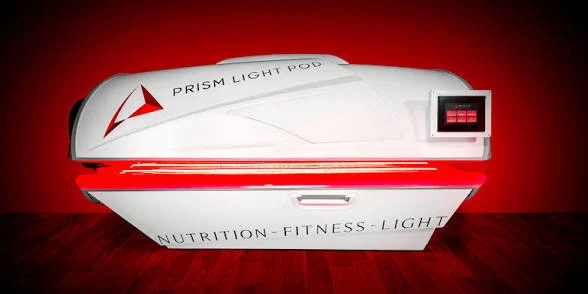
At Revive Wellness & Beauty in Powell, Ohio, we use the Prism Light Pod—a full-body system that surrounds the body with more than 17,000 LEDs and combines 630 nm and 660 nm red light with 850 nm near-infrared light.
And the actual light session?
Just 15 minutes.
So how many red light therapy sessions do you need?
For many goals studied with photobiomodulation, repeated sessions are used rather than a single treatment. The exact schedule depends on what you are hoping to accomplish, the device being used, and how your body responds.
And that is where red light therapy gets interesting.
________
Why Is Everyone Talking About Red Light Therapy?
Red light therapy is appealing because it is non-invasive, does not use UV light, and can fit into a busy day without the downtime associated with many other treatments.
You simply lie inside the pod while red and near-infrared light surround the body.
No needles.
No workout clothes.
No recovery time afterward.
And at Revive, the light portion of the Prism session lasts about 15 minutes.
But convenience is only part of the story.
Photobiomodulation has been studied for a variety of applications, and researchers continue to investigate how specific wavelengths and doses of light interact with tissue.
That does not mean one red light device can promise every benefit you see online.
It does mean there is legitimate science behind why red and near-infrared light continue to attract attention.
Research overview: A 2025 umbrella review evaluated 15 meta-analyses covering 204 randomized clinical trials and more than 9,000 participants across multiple photobiomodulation applications. The strength of evidence varied substantially by outcome, which is exactly why we discuss benefits by specific goal rather than treating every red light claim as equally proven. Read the 2025 umbrella review on PubMed.
________
What Can Red Light Therapy Potentially Help With?
1. Skin Appearance and Rejuvenation
Skin is one of the most interesting and established areas of photobiomodulation research.
Red and near-infrared light have been studied in relation to skin rejuvenation, photoaging, and changes in skin appearance.
Research has evaluated outcomes involving collagen-related changes, wrinkles, skin texture, and other signs of photoaging using specific devices and treatment protocols.
That is why red light therapy has become such a popular addition to aesthetic and wellness routines.
If skin is your main goal, the important thing is to think in terms of a series and consistency rather than expecting one 15-minute session to transform your skin overnight.
Research: A randomized controlled trial of 136 participants found improvements in skin complexion, skin roughness, and collagen density after repeated red and near-infrared light treatments. Read the skin rejuvenation study on PubMed.
If skin appearance is your goal, you may also be interested in our facials and skin treatments at Revive.
2. Hair Growth Research
Photobiomodulation has also been studied for certain types of hair loss, including androgenetic alopecia.
This is an area where repeated treatment matters. Hair growth occurs slowly, so studies evaluating light-based approaches generally look at treatment over time rather than what happens after one session.
If you are experiencing new or unexplained hair loss, however, red light should not replace figuring out why it is happening.
Hormones, nutrition, thyroid health, medications, stress, illness, and rapid weight loss can all matter.
Research: A meta-analysis of 15 studies involving 795 participants found photobiomodulation improved hair density compared with control in androgenetic alopecia. Read the hair-loss meta-analysis on PubMed.
If hair loss may be connected to hormonal changes, read our guide to symptoms that may be hormonal.
3. Pain and Inflammation Research
Red and near-infrared photobiomodulation have been studied in pain and inflammation-related applications.
The important distinction is that many published studies use localized treatment over a specific area rather than a full-body pod.
So we do not take a study on one joint or muscle and promise that a whole-body session will produce the exact same result.
But the research is one reason people interested in recovery, mobility, and wellness are increasingly curious about photobiomodulation.
Research: A 2023 review of 11 randomized controlled trials reported beneficial findings for chronic pain and inflammation in several included studies, while also emphasizing that more research is needed. Read the pain and inflammation review on PubMed.
For clients building a broader recovery routine, Revive also offers full-body cryotherapy and infrared sauna.
4. Exercise and Recovery Research
Photobiomodulation has been studied in exercise, muscle performance, and recovery research—but the details matter.
A 2024 meta-analysis of randomized trials evaluating pre-exercise photobiomodulation reported benefits in some muscle endurance and recovery outcomes across localized treatment protocols.
Whole-body photobiomodulation is a newer area of research. A 2025 systematic review found that the small number of available whole-body studies did not demonstrate improved exercise performance or fatigue biomarkers, although some sleep-related findings were reported.
So the takeaway is not that red light “doesn’t work.”
It is that localized PBM research and whole-body PBM research are not identical, and we should not promise outcomes that have not been demonstrated for the exact type of treatment being used.
Research: A 2024 meta-analysis evaluated photobiomodulation before exercise for muscle endurance and recovery. Read the exercise and recovery meta-analysis on PubMed. A separate 2025 systematic review specifically evaluating whole-body photobiomodulation found that the limited available studies did not show improvements in exercise performance or fatigue biomarkers. Read the whole-body PBM review on PubMed.
5. A Simple Wellness Reset
Not every reason to use red light therapy has to be complicated.
Some people simply enjoy having 15 minutes to lie down, unplug, and make wellness part of their routine.
There is value in choosing wellness habits you actually enjoy and can realistically maintain.
For other ways to build a recovery and wellness routine at Revive, explore our wellness therapies.
________
Why the Prism Light Pod Is Different From a Small Red Light Panel
Not every red light device delivers the same experience—or the same treatment parameters.
According to the Prism Light Pod manufacturer, the system uses:
- More than 17,000 LEDs
- 630 nm red light
- 660 nm red light
- 850 nm near-infrared light
- 360-degree full-body coverage
- An automated 15-minute light session
- No UV light
Instead of standing in front of a small panel and repositioning different areas of your body, the pod surrounds you with light.
That full-body experience is one of the reasons we chose the Prism Light Pod for Revive.
The specifications do not guarantee a particular result, but they do matter when comparing devices.
________
Red Light vs. Near-Infrared Light: Why Does the Prism Use Both?
Red light and near-infrared light are different wavelength ranges, and researchers do not treat every wavelength as interchangeable.
The Prism Light Pod combines 630 nm and 660 nm red light with 850 nm near-infrared light.
Different wavelengths are studied for different treatment targets and depths, and wavelength is only one part of the equation. Dose, irradiance, treatment time, treatment area, and frequency also matter.
That is why calling every device simply “red light therapy” can hide some important differences.
At Revive, you are receiving a combination of red and near-infrared wavelengths in one full-body session.
________
What Happens During a 15-Minute Prism Light Pod Session?
It is simple.
You get comfortable inside the full-body Prism Light Pod while the LEDs surround your body with red and near-infrared light.
You can undress to your comfort level. Because clothing blocks light from reaching covered skin, many clients choose to use the pod nude or wearing underwear.
At Revive, we recommend using the provided eye protection during treatment.
The actual light portion of the session lasts approximately 15 minutes.
The system does not use UV light, so it is not a tanning bed and is not intended to tan your skin.
Then you get dressed and go on with your day.
There is no required downtime after a standard wellness session.
________
So, How Often Should You Do Red Light Therapy?
If you are using red light therapy for a goal, think routine—not one-and-done.
Many photobiomodulation studies use repeated treatments over a period of weeks.
The exact frequency varies because skin research, hair research, localized pain studies, exercise protocols, and whole-body wellness applications are not all performed the same way.
That is why we do not want to give every person the exact same number simply because it sounds easy.
At Revive, we can help you think about frequency based on:
- Why you are interested in red light therapy
- Whether your goal is aesthetic, recovery-focused, or general wellness
- How consistently you can realistically come
- How you respond over time
- Whether continuing the routine is providing value for you
The bigger idea: one session can introduce you to red light therapy, but a consistent routine is more aligned with how many photobiomodulation outcomes have been studied.
________
When Might You Start Noticing Changes?
That depends on what you are looking for.
A relaxing 15-minute experience is immediate.
Changes in skin appearance, hair growth, or other measurable outcomes are different. Those biological changes take time and, when studied, generally involve repeated treatments rather than one session.
So do not judge your entire red light experience based on whether you see a dramatic change after visit number one.
If you have a specific goal, give the routine an appropriate amount of time and then reassess.
________
Can You Do Red Light Therapy Too Often?
More is not automatically better.
Photobiomodulation is dose-dependent. Increasing the length or frequency of sessions beyond a device-specific protocol does not guarantee faster or better results.
Follow the recommended session length and your treatment plan rather than deciding that if 15 minutes is good, 45 minutes must be three times better.
It does not work that way.
________
Is Professional Red Light Therapy Different From an At-Home Device?
It can be very different.
Home masks, handheld devices, mats, panels, and professional full-body systems can vary in:
- Wavelengths
- Number and arrangement of LEDs
- Irradiance
- Distance from the body
- Treatment area
- Session duration
- Total dose
A home device may be convenient and may have a role in someone’s routine.
But you cannot assume a study performed with one device proves that every red light product on the internet will deliver the same result.
At Revive, the Prism Light Pod gives you a full-body, 360-degree red and near-infrared light experience in one 15-minute session.
________
Why We Chose the Prism Light Pod at Revive
We wanted red light therapy at Revive to be more than standing in front of a small panel.
The Prism gives us:
Full-body coverage.
Three complementary red and near-infrared wavelengths.
More than 17,000 LEDs.
A simple 15-minute session.
No UV light.
And most importantly, it gives our clients an easy way to make red light therapy part of a regular wellness routine.
We still believe in realistic expectations.
But realistic does not have to mean boring.
Red light therapy is an exciting area of wellness and photobiomodulation research, and the Prism allows us to offer that technology in a comfortable, full-body format.
Advanced technology. A simple 15-minute session. A routine built around your goals.
________
Is Red Light Therapy Worth Trying?
If you are curious about red light therapy, the easiest way to decide whether you like it is to experience it.
You do not need to understand every wavelength before your first session.
You do not need to commit to months of treatments before you know whether you enjoy the experience.
And you do not need to believe every dramatic claim you see online.
Start with a goal.
Try the full-body Prism Light Pod.
See how it fits into your routine.
Then decide whether you want to build consistency around it.
For someone looking for a non-invasive, UV-free wellness treatment that takes only 15 minutes, red light therapy can be an easy service to explore.
________
Who Should Ask Before Using Red Light Therapy?
Red light therapy is non-invasive, but that does not mean every person should skip a basic safety conversation.
Talk with your healthcare provider or the Revive team before treatment if you have significant eye disease or light sensitivity, take medications that may increase photosensitivity, have a medical condition that makes you unsure whether light therapy is appropriate, or have been told to avoid light-based treatments.
At Revive, we recommend using the provided eye protection during your Prism Light Pod session.
Red light therapy should not replace appropriate medical evaluation or treatment for a health concern.
________
Frequently Asked Questions
How many red light therapy sessions do you need?
There is no one number for every goal. Many photobiomodulation studies use repeated sessions over several weeks, but the schedule varies by application, device, wavelength, dose, and treatment area. At Revive, we help you think about a realistic routine based on what you are hoping to accomplish.
How often should I do red light therapy?
Repeated treatments are common in photobiomodulation research, but there is no universal frequency that applies to every goal or every device. Follow the protocol for the device and your treatment plan rather than assuming more is always better.
How long is a Prism Light Pod session?
The actual light portion of a Prism Light Pod session is approximately 15 minutes, making it easy to fit into a busy day.
What wavelengths does the Prism Light Pod use?
According to the manufacturer, the Prism Light Pod combines 630 nm and 660 nm red light with 850 nm near-infrared light.
What are the benefits of red light therapy?
Photobiomodulation has been studied in areas including skin rejuvenation, certain hair-loss applications, pain and inflammation-related applications, and exercise-related research. The strength of evidence and treatment protocols differ by goal, so benefits should be discussed in the context of the specific application and device.
Does red light therapy help skin?
Red and near-infrared photobiomodulation have been studied for skin rejuvenation and photoaging. Studies use specific wavelengths, doses, and repeated treatment protocols, so results and timelines vary.
Can red light therapy help hair growth?
Photobiomodulation has been studied for certain forms of hair loss, including androgenetic alopecia. Hair changes take time, and unexplained hair loss should also be evaluated for possible underlying causes.
Does red light therapy help with pain or inflammation?
Photobiomodulation has been studied in pain and inflammation-related applications, particularly with localized treatment. Results from localized studies should not automatically be assumed to be identical to whole-body treatment.
Does red light therapy help workout recovery?
Localized photobiomodulation has shown benefits in some exercise and recovery research. Whole-body photobiomodulation has a smaller evidence base, so we do not promise a specific performance or recovery result from the Prism Light Pod.
Will I notice anything after my first session?
You may immediately enjoy the warmth-free light experience and time to relax, but measurable outcomes such as changes in skin or hair generally require repeated treatment and time.
Do I need eye protection during red light therapy?
At Revive, we recommend wearing the provided eye protection during your Prism Light Pod session. If you have an eye condition, light sensitivity, or questions about whether red light therapy is appropriate for you, talk with your healthcare provider before treatment.
Is the Prism Light Pod the same as a tanning bed?
No. The Prism Light Pod uses red and near-infrared LEDs and does not use UV light. It is not intended to tan the skin.
What do I wear during red light therapy?
You can undress to your comfort level. Because clothing blocks light from reaching covered skin, many clients choose to use the pod nude or wearing underwear. We recommend using the provided eye protection.
Can I do more sessions to get faster results?
Not necessarily. Photobiomodulation is dose-dependent, and more exposure does not automatically produce a better response. Follow the recommended session duration and treatment plan.
Do I need maintenance red light therapy sessions?
There is no universal maintenance schedule. Some people choose to keep red light therapy as part of an ongoing wellness routine, while others use it for a defined period and then reassess.
Is a professional full-body pod the same as a home red light device?
Not necessarily. Devices can differ significantly in wavelengths, irradiance, treatment area, distance, session duration, and total dose. The Prism Light Pod provides 360-degree full-body red and near-infrared light in a 15-minute session.
________
Medical References
Wunsch A, Matuschka K. A controlled trial to determine the efficacy of red and near-infrared light treatment in patient satisfaction, reduction of fine lines, wrinkles, skin roughness, and intradermal collagen density increase. Photomedicine and Laser Surgery. 2014;32(2):93–100. Read the study on PubMed.
Gupta AK, Carviel JL. Meta-analysis of photobiomodulation for the treatment of androgenetic alopecia. Journal of Dermatological Treatment. 2021;32(6):643–647. Read the meta-analysis on PubMed.
Dompe C, Moncrieff L, Matys J, et al. Efficacy of Photobiomodulation Therapy in the Treatment of Pain and Inflammation: A Literature Review. Healthcare. 2023;11(7):938. Read the review on PubMed.
Kim et al. Effects of photobiomodulation on multiple health outcomes: an umbrella review of randomized clinical trials. 2025. Read the umbrella review on PubMed.
Álvarez-Martínez M, Borden G. A systematic review on whole-body photobiomodulation for exercise performance and recovery. Lasers in Medical Science. 2025;40(1):55. Read the review on PubMed.
Li BM, Qiu DY, Ni PS, et al. Can pre-exercise photobiomodulation improve muscle endurance and promote recovery from muscle strength and injuries in people with different activity levels? A meta-analysis of randomized controlled trials. Lasers in Medical Science. 2024;39(1):132. Find the study on PubMed.
Glass GE. Photobiomodulation: A Systematic Review of the Oncologic Safety of Low-Level Light Therapy for Aesthetic Skin Rejuvenation. Aesthetic Surgery Journal. 2023;43(5):NP357–NP371. Find the review on PubMed.
Prism Light Pod. Device specifications for the full-body Prism Light Pod, including 630 nm, 660 nm, and 850 nm wavelengths, 17,000+ LEDs, 360-degree coverage, and automated 15-minute sessions. Review the manufacturer’s device information.
________
Ready to See What 15 Minutes of Red Light Feels Like?
You can read about red light therapy all day.
But at some point, the easiest way to understand why people add it to their wellness routine is to experience it for yourself.
15 minutes.
Full-body red + near-infrared light.
No UV.
No downtime.
Just get comfortable, put on your eye protection, and let the Prism Light Pod do its thing.
If you are looking for red light therapy in Powell, Ohio, we would love to show you the Prism Light Pod and help you decide how it could fit into your wellness routine.
You can also read our cryotherapy research guide or explore our wellness therapies to compare options.
________
Red Light Therapy • Infrared Sauna • Full-Body Cryotherapy • Wellness Memberships • Contact Us